Agent Tool Call
Four consolidated lanes trace a policy-aware agent loop across user interaction, agent runtime, policy and recovery, and tool execution with evidence.
Every frame below is a live Archify artifact—not a mockup. Each one is regenerated from versioned JSON IR, checked for structural integrity, and linked to the exact source that produced it.
The gallery records automated structure and layout checks, not human visual-review results. Open each artifact to assess its meaning and readability.
Every scenario supports focus, shareable links, dark/light rendering, self-contained export, and a machine-readable quality receipt. Reach and path exploration follow authored relationships where present.
Four consolidated lanes trace a policy-aware agent loop across user interaction, agent runtime, policy and recovery, and tool execution with evidence.
Regions, private networks, workload owners, state, cross-region replication, audit evidence, and named boundary crossings.
A time-ordered request path covering authentication, cache fallback, persistence, return traffic, and async tracing.
A change moves through reproducible build, blocking gates, human approval, canary verification, communication, and rollback.
Detection, incident command, mitigation, stakeholder communication, escalation, rollback, and recovery evidence.
Events move through consent, streaming, PII isolation, warehouse sync, and governed downstream consumers.
A fast acknowledgement leads into durable queueing, background work, retry, final-state storage, webhook, and polling fallback.
Named producers, partitioned topics, consumer groups, idempotent state, dead letters, operator ownership, and controlled replay.
Planning, execution, review, human approval, retry, cancellation, and terminal outcomes in one state model.
The deployment object moves through build, verification, approval, promotion, health pause, rollback, and explicit terminal outcomes.
A classic AWS web stack with edge delivery, authentication, API services, cache, persistence, and background work.
Six tables with their complete column lists, primary, foreign, and unique keys, crow-foot cardinality at both ends, and one optional non-identifying payment link.
OrderService depends on the PaymentGateway contract; card and wallet gateways implement it, with key members and explicit implements arrows.
A single-parent capability tree: orders, payments, and operations branches with the capabilities each one contains.
An illustrative incident review on one timestamped axis: deploy, alert, rollback, and recovery across release, monitoring, and response lanes.
Illustrative timings for one checkout request: a nested parent span, sequential spans, and concurrent inventory and discount lookups.
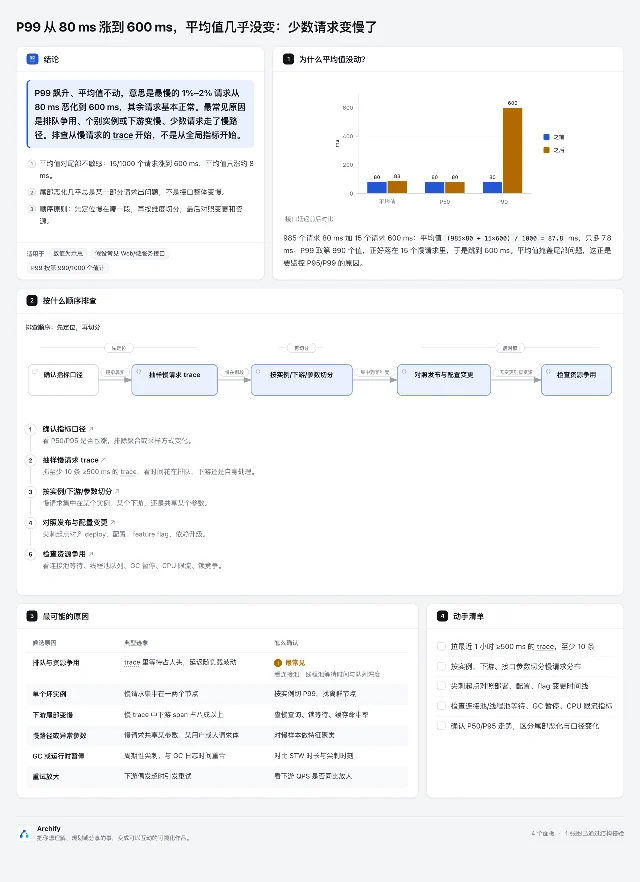
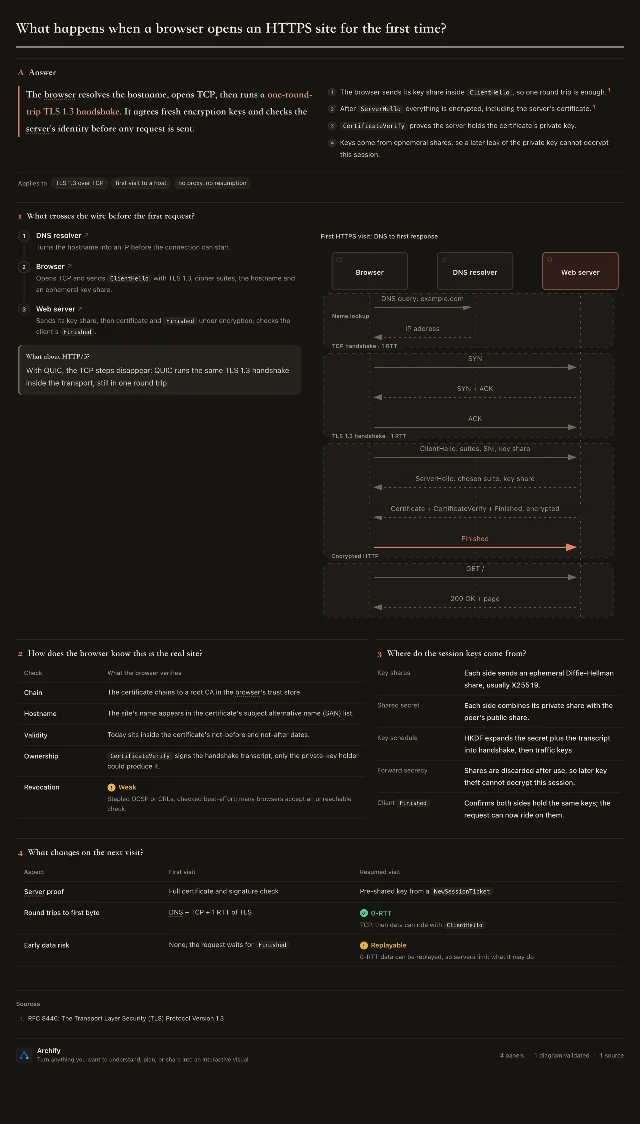
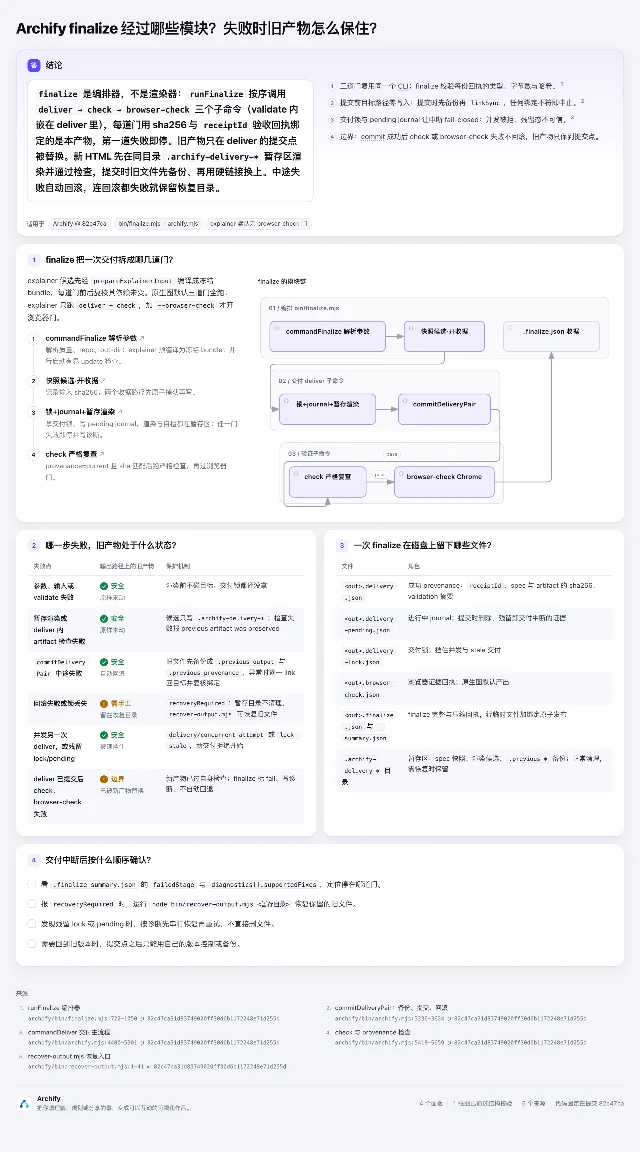
Each page passed finalize: its diagrams are validated native artifacts, its repository excerpts are read from a pinned commit, and the Markdown draft sits beside it. Each is shown in a different style; every page offers all four.
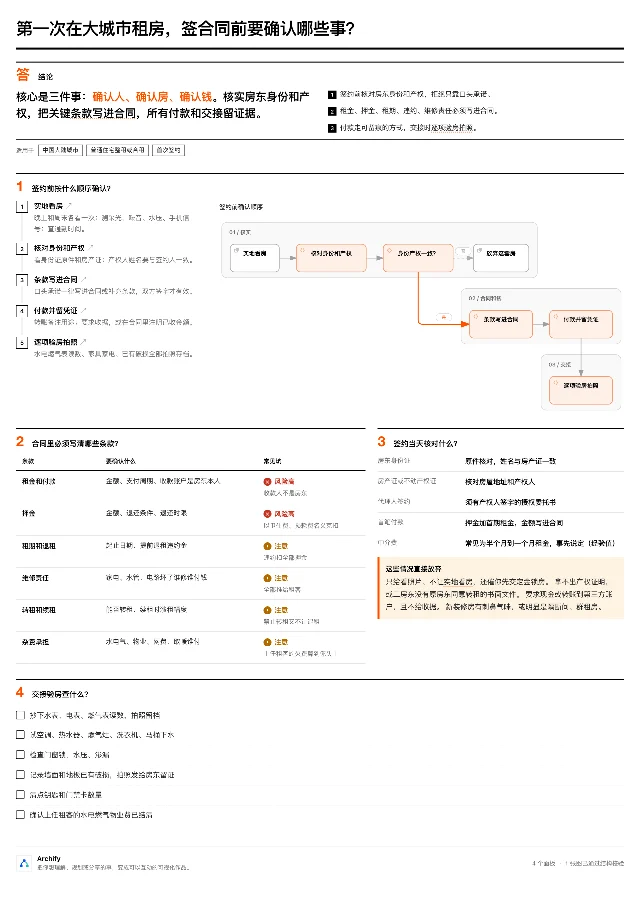
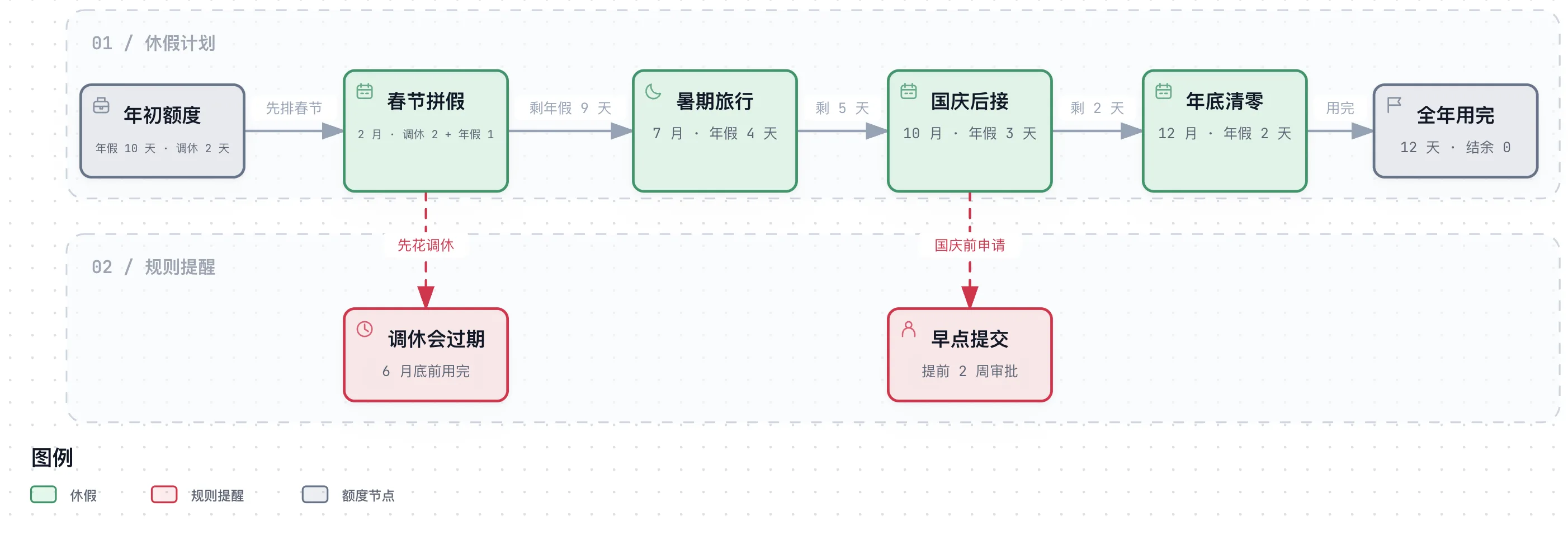
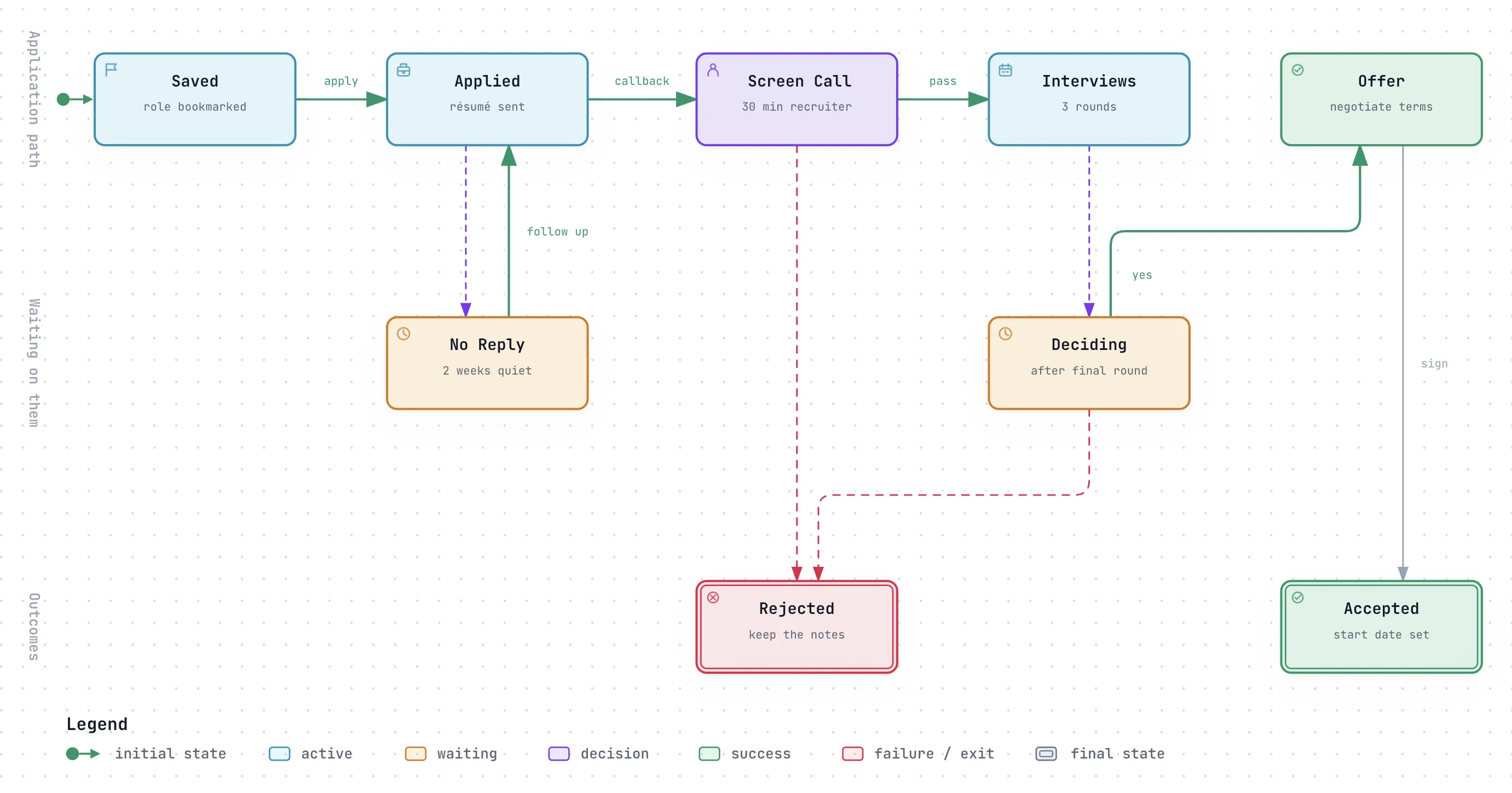
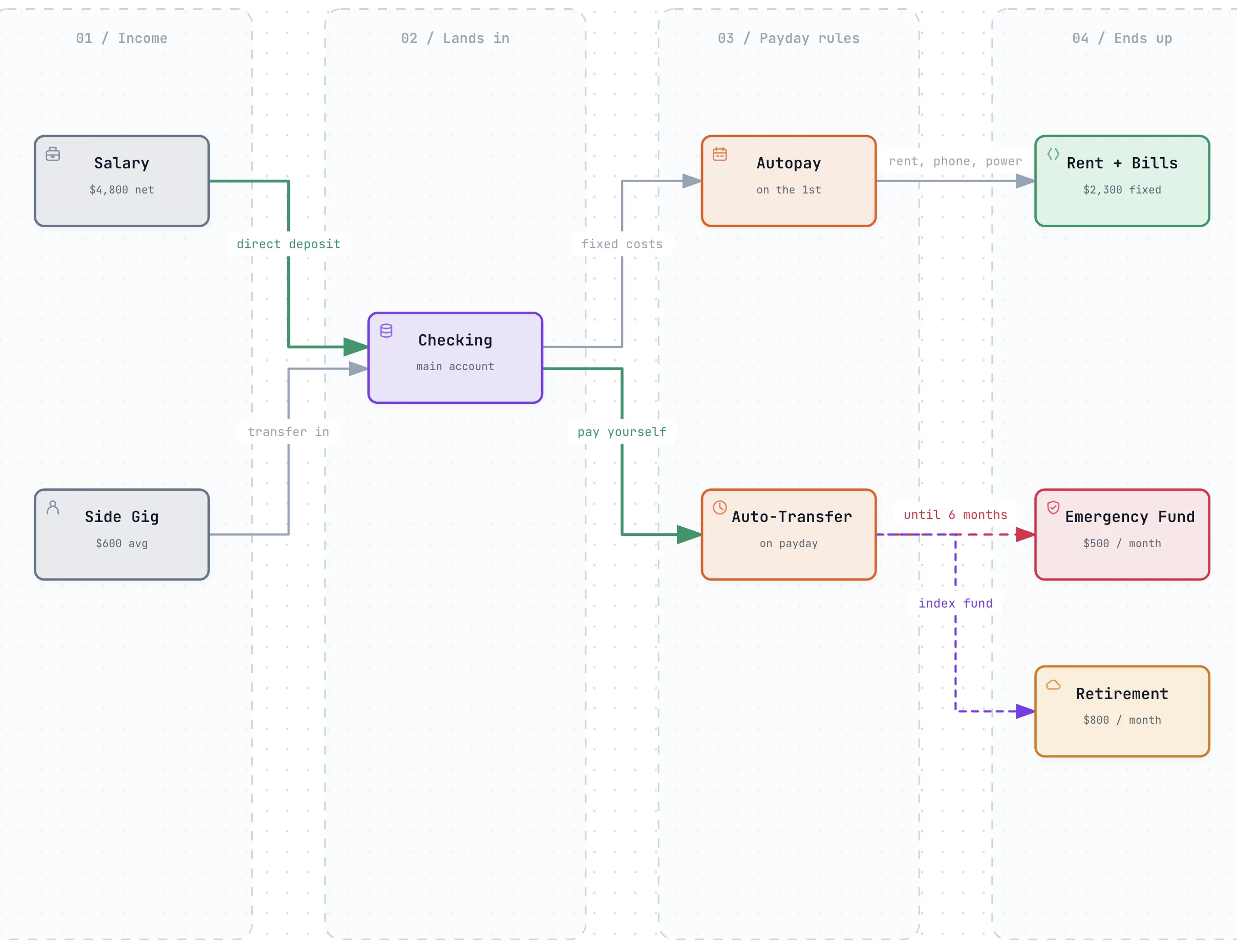
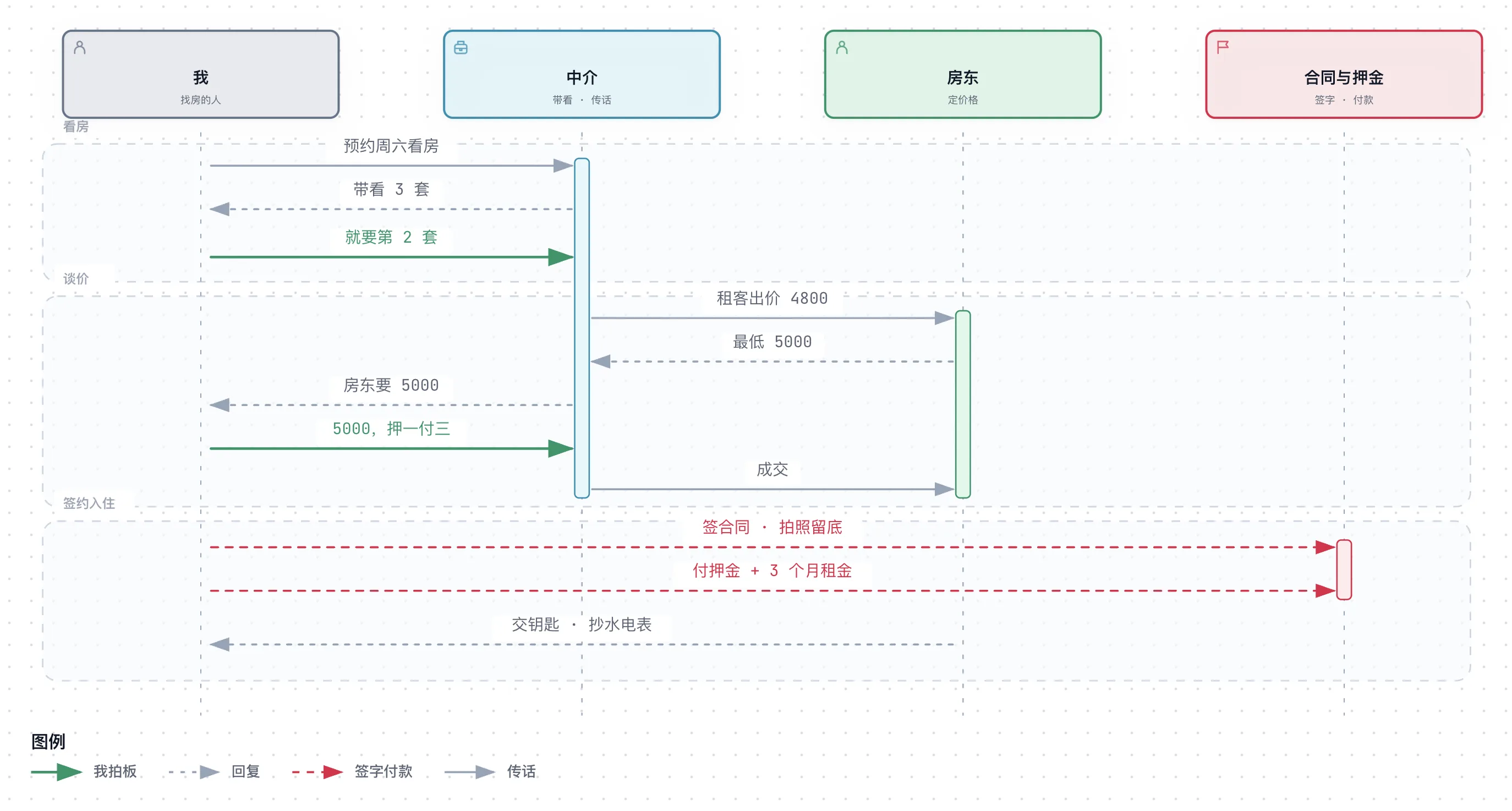
Everyday plans and processes, generated and checked by the same renderers and gates. Numbers are illustrative; the JSON source sits beside each artifact.
Share the redacted source, verified artifact, validation receipt, and visual-review result. Approved work can join the community Proof Lab with attribution.
$ node scripts/build-gallery.mjs
render workflow ✓
render sequence ✓
render dataflow ✓
render lifecycle ✓
render architecture ✓
render erd ✓
render class ✓
render tree ✓
render timeline ✓
render waterfall ✓
receipt 144 checks / 16 artifacts / deterministic hashes